Many customers often confuse resistance with impedance.
Resistance is like a steady “friction” against electricity. It doesn’t change — it’s the fixed load a component presents when electricity flows in one direction (DC).
Impedance is more like a “moving target.” It changes depending on the signal (AC) and frequency. Impedance combines resistance with other effects inside the component, so it varies as the sound or signal changes. For speakers, the nominal impedance is defined as the minimum point above the resonance frequency on the impedance curve.
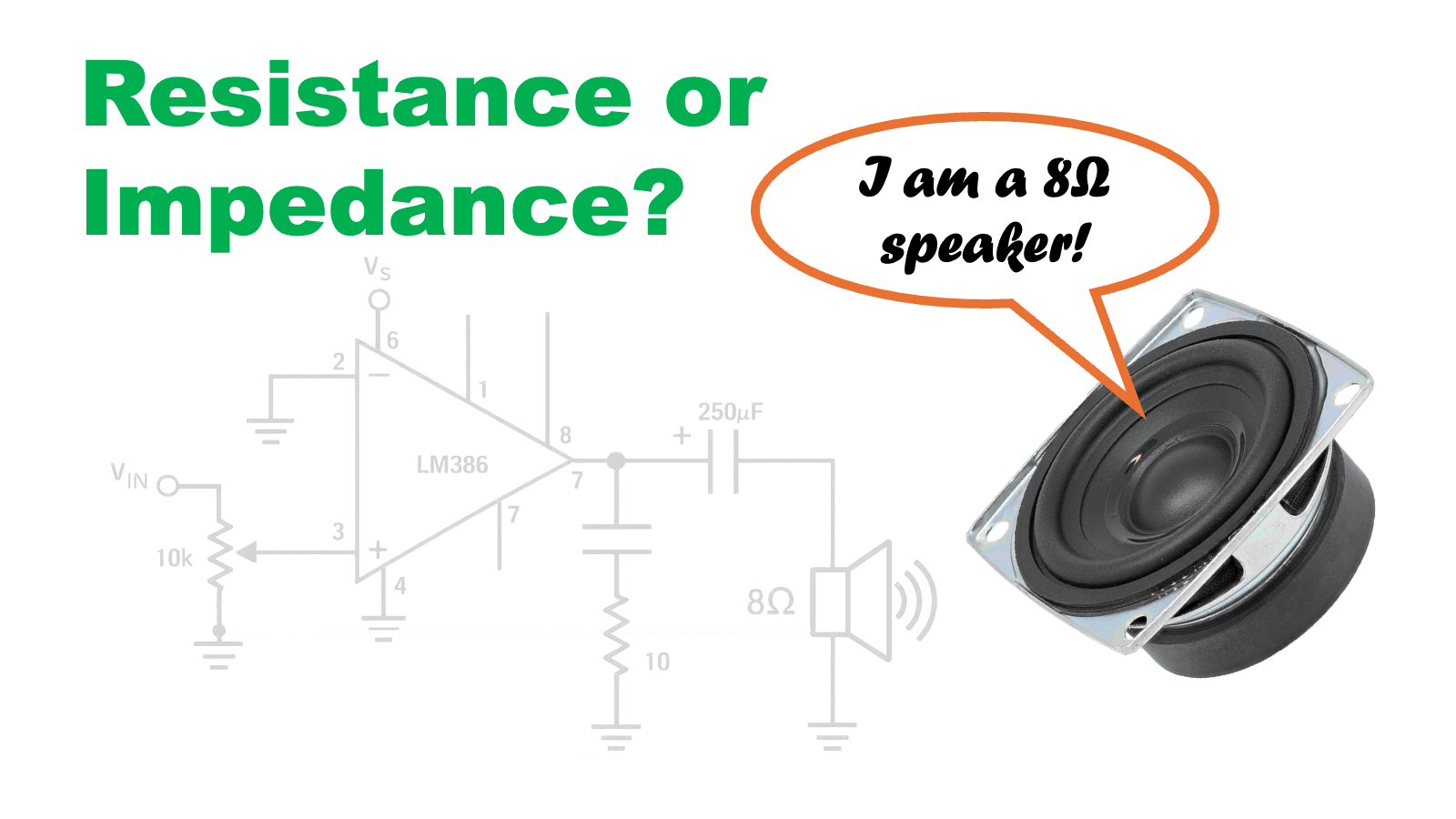
Impedance matching with the amplifier is especially important for speakers. If they don’t match, you can lose sound quality or even damage equipment. That’s why you often see ratings like 4 Ω, 8 Ω, or 32 Ω — these are common impedance values for loudspeakers and earphones. Matching impedance with the amplifier output is critical for optimal performance.
If you have questions about selecting the proper resistance or impedance for your acoustic components, please contact us for guidance.
Resistance vs Impedance
Filed under Technical Blog